Stonington Commercial Roofing Contractor
Edge Metal and Fasteners Chosen to Stand Up to Salt Air
As a Stonington commercial roofing contractor, we install TPO, EPDM, and metal roofs near the water with coastal-rated edge metal, corrosion-resistant fasteners, and tighter attachment at corners.
Stonington Commercial Roofing for Salt Air and Shoreline Wind
On waterfront buildings, Stonington commercial roofing has to answer two questions before anything else: what will the salt do to the metal, and how hard will the wind pull at the edges? The membrane itself handles salt well. The metal parts that hold it down are where coastal roofs start to fail.
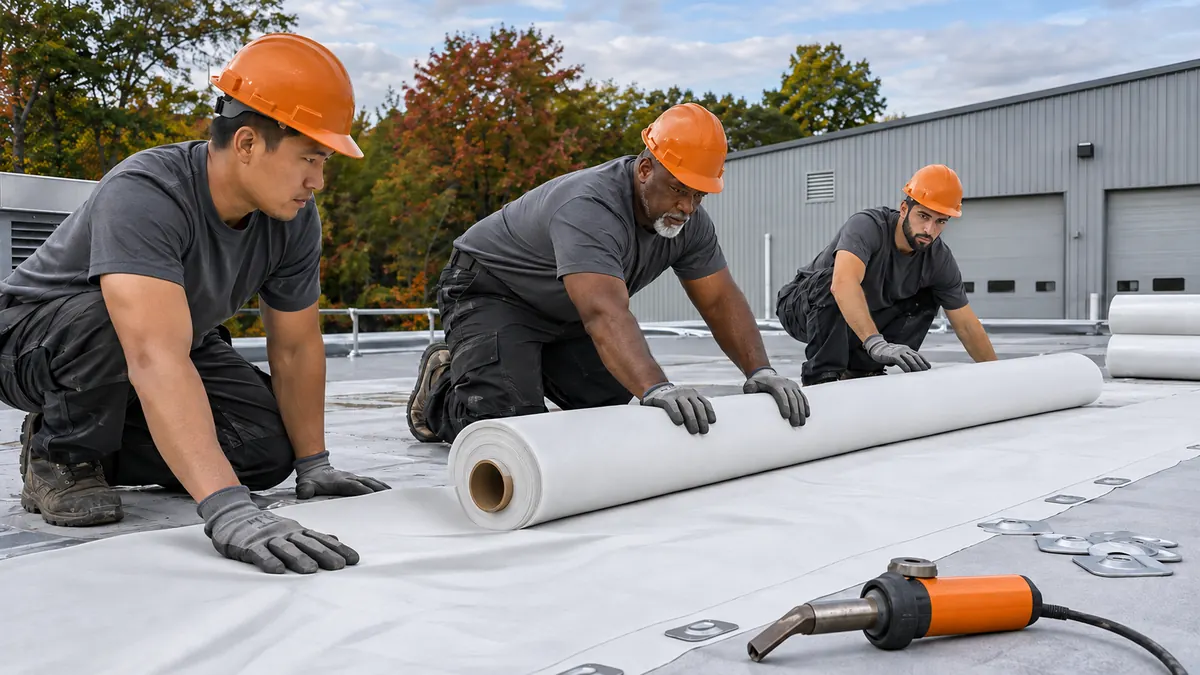
We specify edge metal, coping, and fasteners rated for coastal exposure, and we follow the manufacturer's attachment pattern for the building's wind zone. Corners and perimeters get the tightest fastener spacing, since uplift is strongest there when storms come in off the water.
- Coated or stainless fasteners in place of plain steel screws near the shore
- Heavier-gauge edge metal and coping with continuous cleats along the perimeter
- Closer fastener rows or full adhesion in corner and perimeter zones
- Rooftop unit housings and curbs checked for rust before they are reflashed
Commercial Roofing Damage We See Along Stonington's Shore
Salt and wind wear a roof from the edges inward. These are the signs owners report and the causes we find on coastal buildings. Most of them start at the perimeter.
Rust Streaks Below The Roof Edge
Orange streaks on siding or brick under the roof line usually come from corroded edge metal or fasteners bleeding rust every time it rains, long before the metal actually fails.
Corroded Edge Metal And Cleats
Plain steel edge metal and cleats rust through near salt water. New coastal-rated metal and continuous cleats hold the membrane edge down again.
Rattling Or Flapping Overhead In Storms
Noise from the roof during a strong blow often means the membrane has come loose at a corner or the edge metal has started to lift away from the wall.
Lifted Corners And Perimeter Sheets
Wind uplift peels roofs from the corners first. Replacement adds denser fastening or adhesive in those zones and secures the edge before the field.
Leaks Only In Wind-Driven Rain
Water that appears during sideways rain but stays dry in calm showers usually enters at copings, parapet caps, or wall flashing facing the water.
Open Coping Joints And Wall Flashing
Coping joints separate as fasteners rust. New coping with sealed joint covers and fresh wall flashing closes the path rain takes in a storm.
What Coastal Commercial Roofing Protects in Stonington
Spending a little more on metal and attachment near the water protects the rest of the roof from the two forces that wear it fastest.
Edges That Stay Fastened Through Storms
Most coastal roof failures start at the edge, where rusted cleats or loose coping let wind get under the membrane. Coastal-rated edge metal, continuous cleats, and close fastening at corners keep the edge locked down, so a storm has nowhere to start peeling the roof back and water stays out of the walls below.
Less Rust Bleeding On Walls
Corrosion-resistant fasteners and edge metal stop the orange streaks that stain siding and brick under older roof edges near the harbor.
Rooftop Units Held Tight
Curbs and equipment supports get new flashing and hold-downs, so units stay put and their flashing stays sealed through gusty weather.
Fewer Wind-Driven Leaks
Sealed coping joints and new wall flashing close the gaps that sideways rain pushes through during nor'easters and summer squalls.
Commercial Roofing Systems Suited to Stonington Waterfront Buildings
Every system below can work near the water when the metal and attachment are chosen for coastal exposure.
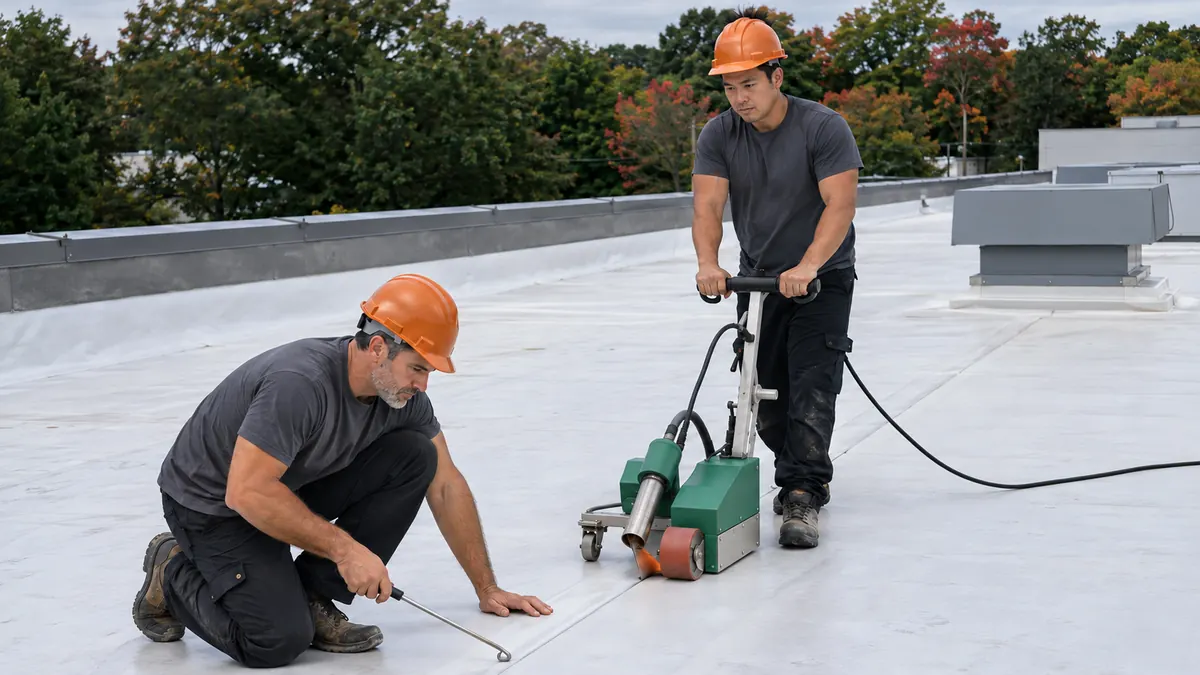
TPO Roofing
Fully adhered or tightly fastened TPO resists uplift on exposed waterfront roofs, and its welded seams shrug off salt spray blowing across the deck.
TPO Roofing in Groton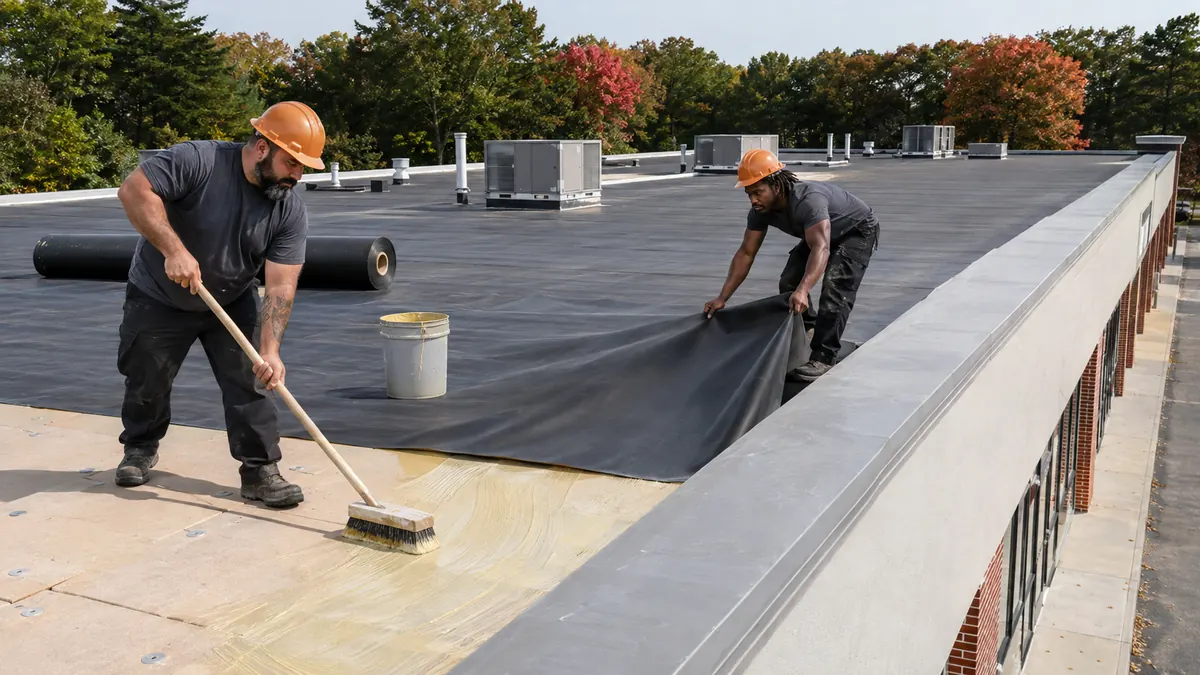
EPDM Roofing
Adhered EPDM holds well in high wind and stays flexible in cold, damp winters; ballasted rubber needs a strong deck and a curb that keeps stone in place.
EPDM Roofing in Groton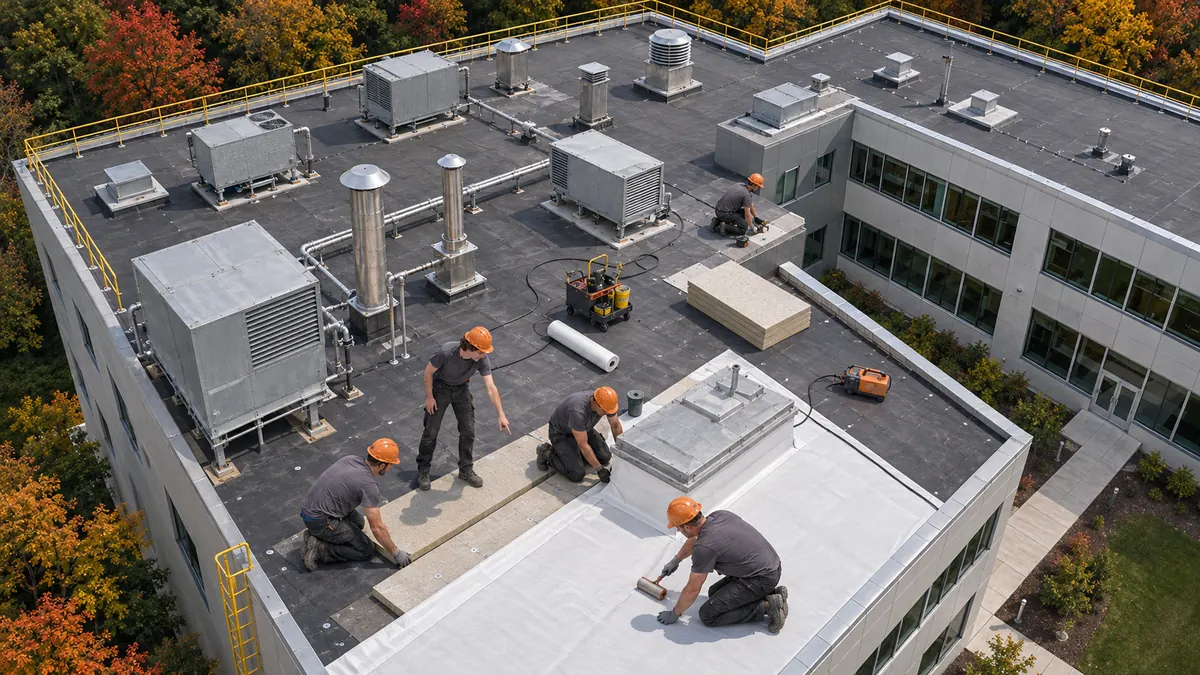
Industrial Roofing
Marine shops and storage buildings get heavier membrane, walkway pads, and curbs built for the equipment and foot traffic that comes with working near boats.
Industrial Roofing in Groton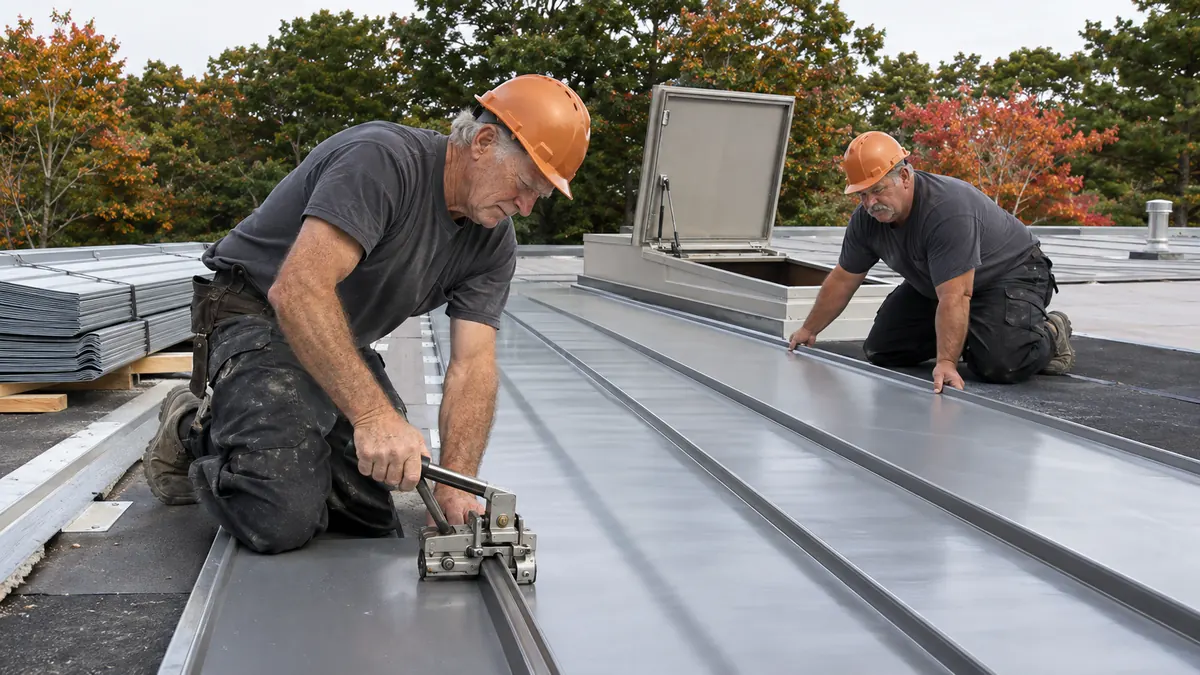
Commercial Metal Roofing
Standing-seam panels with concealed clips and coated fasteners suit sloped roofs near the water, since fewer exposed screws means fewer spots for salt to attack.
Commercial Metal Roofing in GrotonStorm Damage on a Stonington Roof?
Leaking Now
Call us and tell us which edge or corner took the wind and where water is getting in.
Call UsPlanning A New Roof
Replacing an aging coastal roof? Send the address and we will inspect the edges, metal, and attachment.
Get A Free EstimateStonington Commercial Roofing Work From Survey to Final Edge
Coastal jobs add steps for metal selection and wind design, then follow the same careful order as any replacement.
- ROOF WALK
Inspect Your Roof
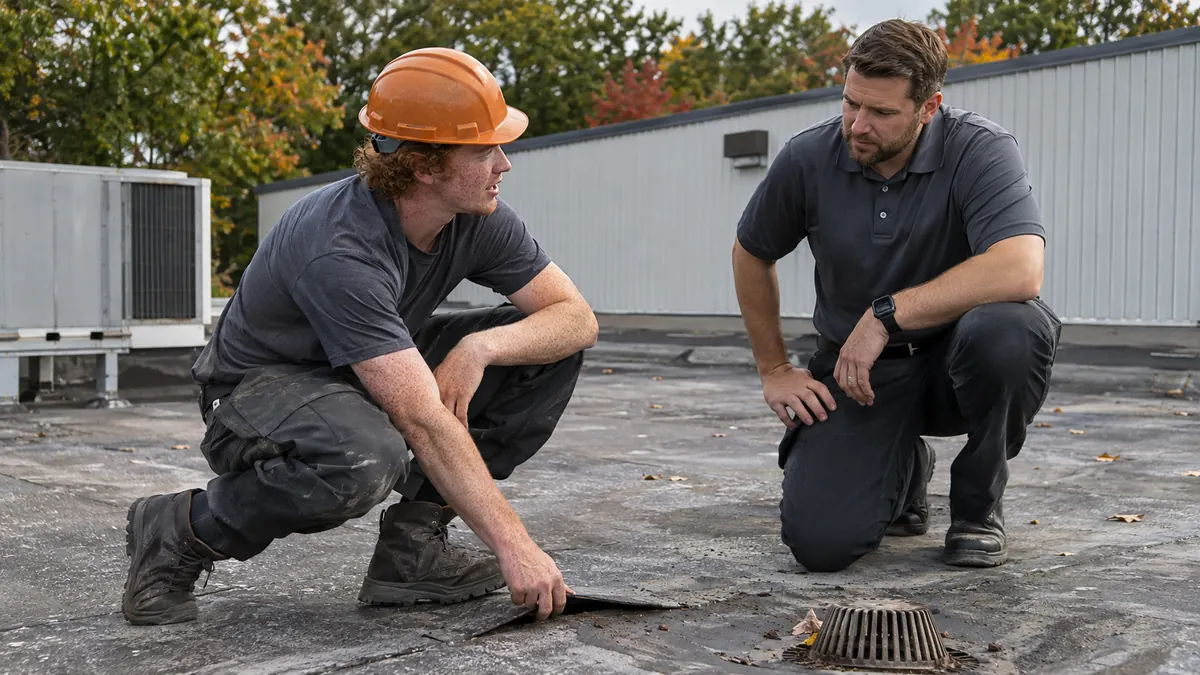
We core the roof, check fasteners and edge metal for rust, pull a few screws to see their condition, and note which edges face open water. Photos of each edge go into the written scope.
- WIND ZONE
Set The Attachment Pattern
The building code's wind design and the manufacturer's pattern for the building's exposure set fastener spacing in the field, perimeter, and corners. Edges facing open water get the strictest pattern.
- TEAR-OFF
Strip And Check The Deck
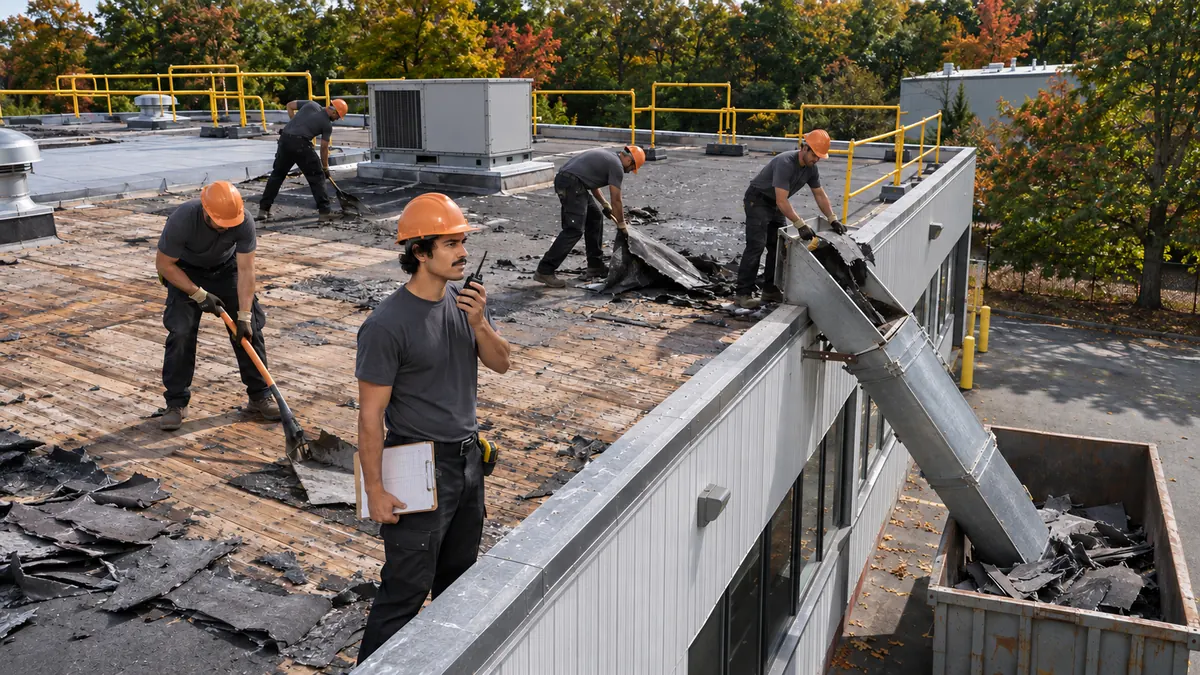
Old roofing comes off in sections, and steel deck near the edges is checked for rust where salt water may have sat for years. Rusted deck panels are replaced before insulation goes down.
- ATTACH
Fasten Insulation And Membrane
Insulation and membrane are fastened or adhered to the pattern, with the closest spacing at corners, then seams are welded or taped.
- EDGE METAL
Install Coastal Edge And Coping
Coastal-rated cleats, edge metal, and coping go on last with corrosion-resistant fasteners, and every joint is sealed against wind-driven rain. Joint covers are sealed so storms find no gaps.
Coastal Towns Around Stonington
Is your building up the coast or inland from Stonington? call us or send us a message and ask. We work in these nearby towns as well.
Stonington Coastal Roof Questions
Owners of buildings near the water ask these questions before a new roof goes on.
Do you install commercial roofs in Stonington and Pawcatuck?
Yes. We install and replace commercial roofs across Stonington, Pawcatuck included, on warehouses, marine-related buildings, and commercial blocks. Buildings close to the water get coastal-rated edge metal and fasteners, and the attachment pattern is sized for the wind exposure at each address.
Which membrane works best for roofing near salt water?
TPO and EPDM both resist salt well, so the choice usually follows slope, equipment, and insulation needs. Salt mostly attacks metal, which is why edge metal, coping, fasteners, and rooftop unit housings get the most attention on coastal Stonington roofs. Rooftop unit housings can be ordered with coastal finishes when units are replaced.
Why is wind uplift at roof corners such a concern on the shore?
Corners and perimeters see the strongest suction when wind crosses a roof. Manufacturers and the building code call for closer fastening or full adhesion in those zones, and on exposed waterfront buildings that extra attachment is what keeps the membrane down in a nor'easter.
How often should a coastal roof be checked?
Twice a year is a good habit, plus a look after any major storm. Checking edge metal, coping joints, and fasteners for rust or lifting catches problems while they are small and keeps wind from finding a loose corner. Clearing drains and checking curb flashing at the same visit adds only a few minutes.
Get Stonington Commercial Roofing Built for the Shore
Call us or send the address, and we will inspect the edges, metal, and attachment and write up a coastal roof scope.