Groton Industrial Roofing Contractor
Roof Systems for Plants, Shops, and Heavy Rooftop Equipment
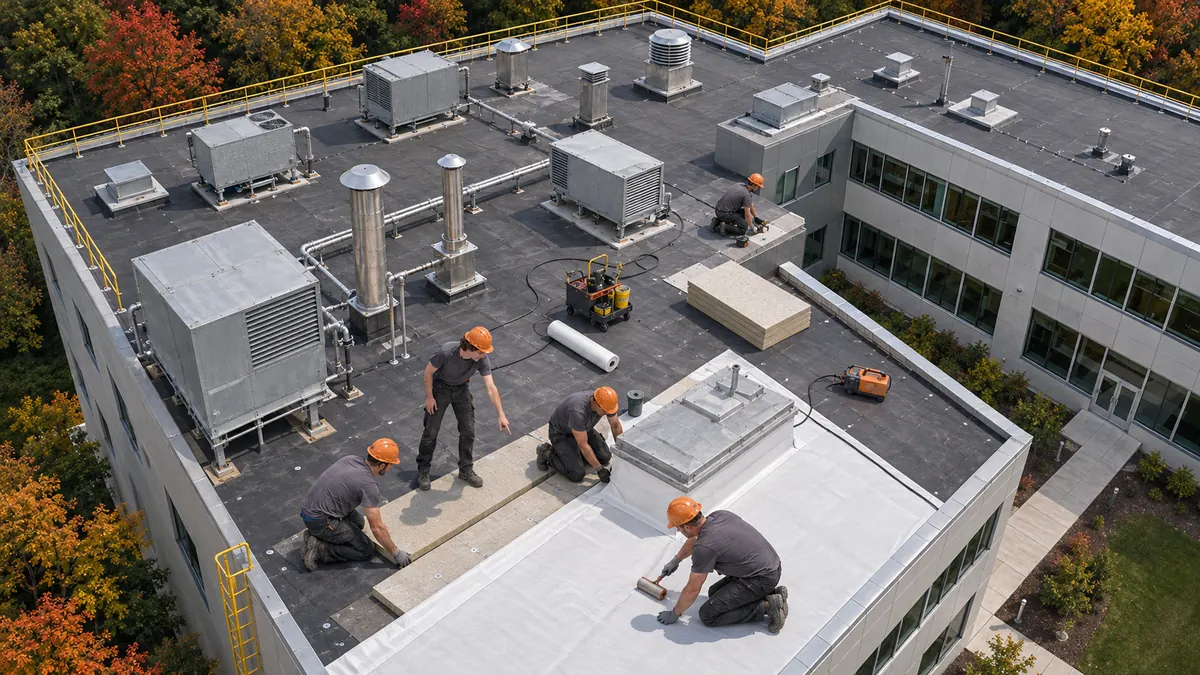
As a Groton industrial roofing contractor, we replace roofs on plants, fabrication shops, and warehouses in sections, working around production, equipment, and shift changes.
Sections closed before shift change
Interior protection over equipment
Raised curbs at heavy units
Walkway pads on service routes
Is Your Plant Ready for Groton Industrial Roofing Work?
Groton industrial roofing replacement fits when the roof is failing across bays. Smaller trouble spots can be handled while production keeps running.
Replacement Fits When
- Leaks hit several bays or production lines
- Core cuts find wet insulation across large areas
- Exhaust and heat have broken down the membrane
- Equipment curbs sit too low for new insulation
- The roof carries two old layers
Start Smaller When
- One exhaust fan or curb is the only leak source
- Damage sits in a single bay
- The deck needs an engineer's review before more weight goes on
- A metal roof only needs new fasteners and sealed laps
Industrial Roofing Problems on Groton Plants
Plant roofs wear differently from office roofs. Heat, exhaust, and traffic leave a pattern you can see from the floor.
Water Over Machinery Or Product
Drips landing on equipment or stored product during rain usually trace to a curb or stack flashing directly above that bay.
Roofing Around Rooftop Equipment
Units, fans, and stacks set after the roof went on often sit on low curbs with patched flashing. New curbs raise them above the insulation and flash them into the membrane.
Stains Near Exhaust Fans
Dark rings around a fan opening inside point to exhaust residue and heat breaking down the membrane around that penetration.
Exhaust Residue And Heat Damage
Grease and process exhaust soften many membranes. Sacrificial walkway membrane, raised curbs, and grease guards protect the zones around fans.
Rust On Deck Flutes Overhead
Orange streaks along the underside of a steel deck mean water has been sitting in the flutes, often under a worn traffic path.
Worn Service Routes
Daily foot traffic to equipment grinds membrane thin. Walkway pads and a tougher membrane along those routes stop the wear where it starts.
Industrial Roofing Materials We Use in Groton
Plant roofs need tougher materials and details. These are the pieces we choose from for each building.
Reinforced Single-Ply
Thicker TPO or EPDM with heavy scrim stands up to foot traffic and the heat rising off process equipment.
Standing-Seam Metal Over Crane Bays
Tall bays with few penetrations often take metal panels, which shed snow and carry fewer seams over long spans.
Modified Bitumen At Busy Areas
Multi-ply modified bitumen holds up in grease and traffic zones and patches well around crowded mechanical areas.
Raised Equipment Curbs
Curbs tall enough to clear new insulation and snow keep flashing above standing water around heavy units.
Walkway Pads And Platforms
Defined service paths and equipment platforms keep technicians off the field membrane between units.
Wind-Rated Perimeter Attachment
Large, open plant roofs see high uplift at corners, so fastening density and edge metal follow the manufacturer's wind design.
What Industrial Roofing Changes for Groton Plants
A new plant roof protects the work happening underneath it.
Production Keeps Running
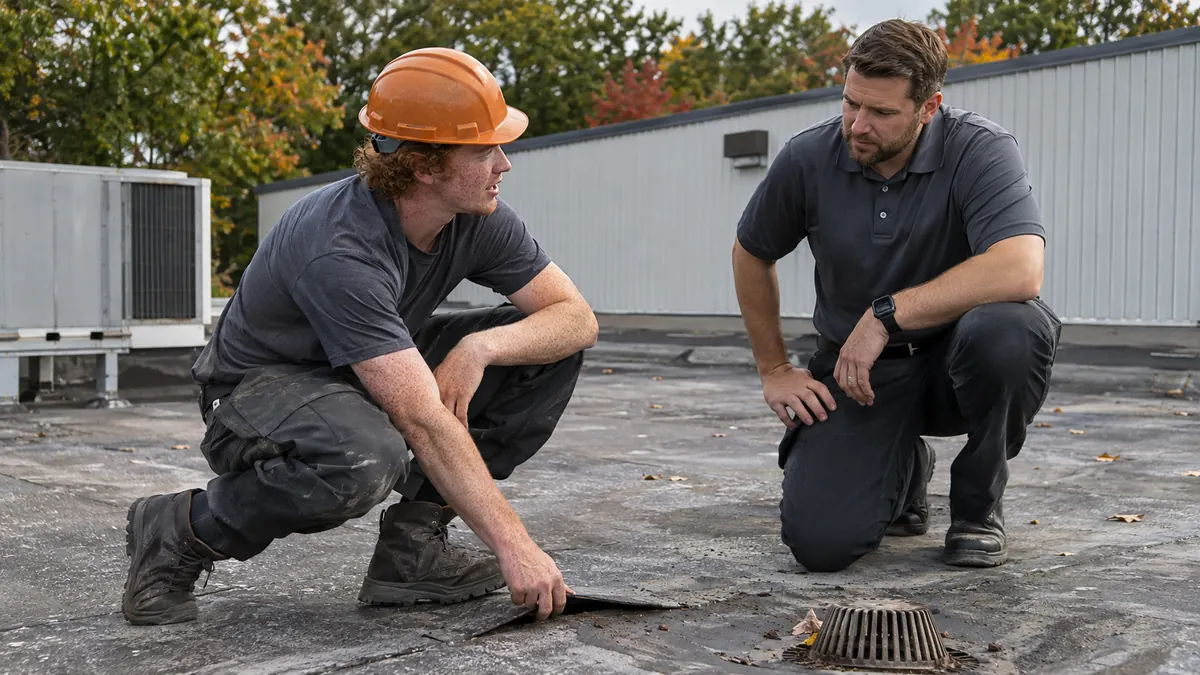
Replacement moves bay by bay, timed around shifts and deliveries, with interior protection set over equipment before each section opens. Every area is closed and watertight before the crew leaves, so the plant floor keeps working while the roof above it is rebuilt one piece at a time.
Equipment On Proper Curbs
Units and fans sit on curbs tall enough for current insulation, flashed into the membrane instead of patched around.
Water Off The Process Floor
Tapered insulation sends water to drains away from production lines that sat under ponding for years.
Records For Your Maintenance Team
Photos, a roof plan of curbs and drains, and the installed system details go into your files for future work.
Plant Roof Leaking in Groton?
Leaking Now
Water on the floor or the line? Call and tell us which bay and what equipment sits above it.
Call UsPlanning A New Roof
Planning a roof around production? Send the address and your shift schedule, and we will set up a walk.
Get A Free EstimateHow Industrial Roof Replacement Runs in Groton
Plant roofs come off and go back on in a fixed order, timed around the work inside.
- ROOF WALK
Inspect Your Roof
Core cuts, an equipment count, and a look at exhaust zones and traffic routes set the scope before anything is priced.
- SHIFT PLAN
Schedule Around Production
Tear-off windows, crane lifts, and noisy work are lined up with shift changes and deliveries so the floor keeps moving.
- PROTECT
Cover Equipment Below
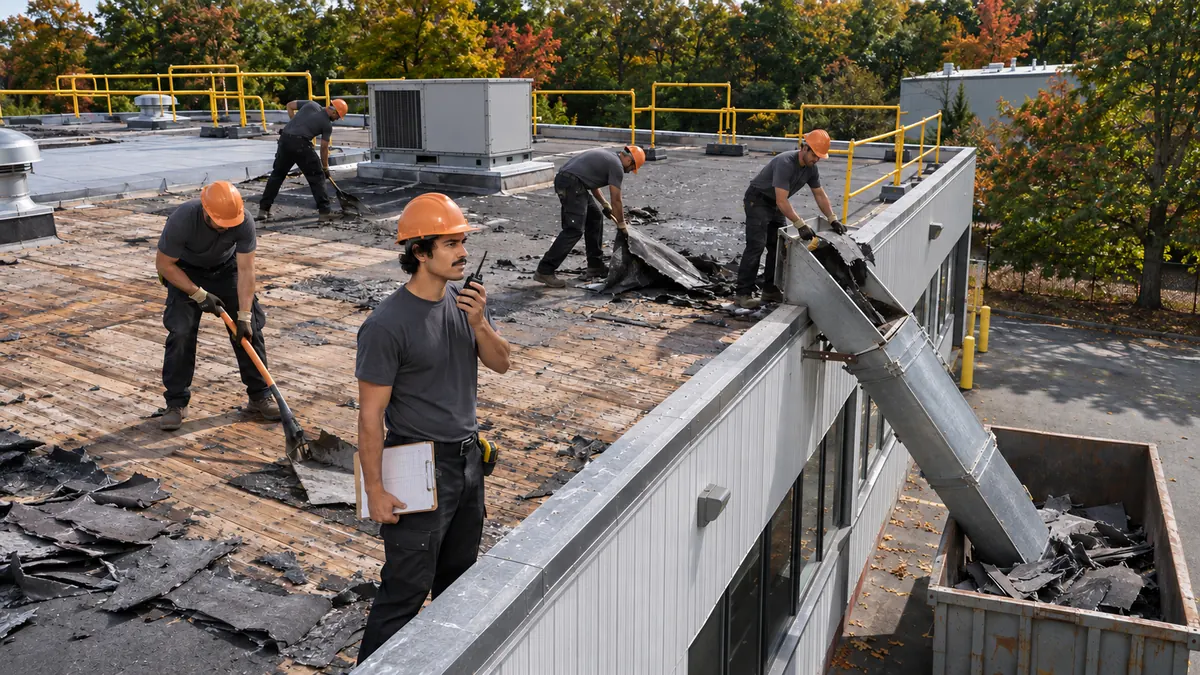
Interior protection goes over machinery and product under each section, and debris chutes are placed away from loading docks.
- REPLACE
Industrial Roof Replacement By Bay
Each bay is stripped, the deck repaired, and new insulation and membrane installed and sealed before the workday ends.
- FLASH
Curb, Flash, And Hand Over
Raised curbs, stack flashings, walkway pads, and edge metal finish the roof, then you get photos and a plan of every detail.
Other Systems for Groton Plant Properties
Industrial roofing often pairs with the other systems we install.
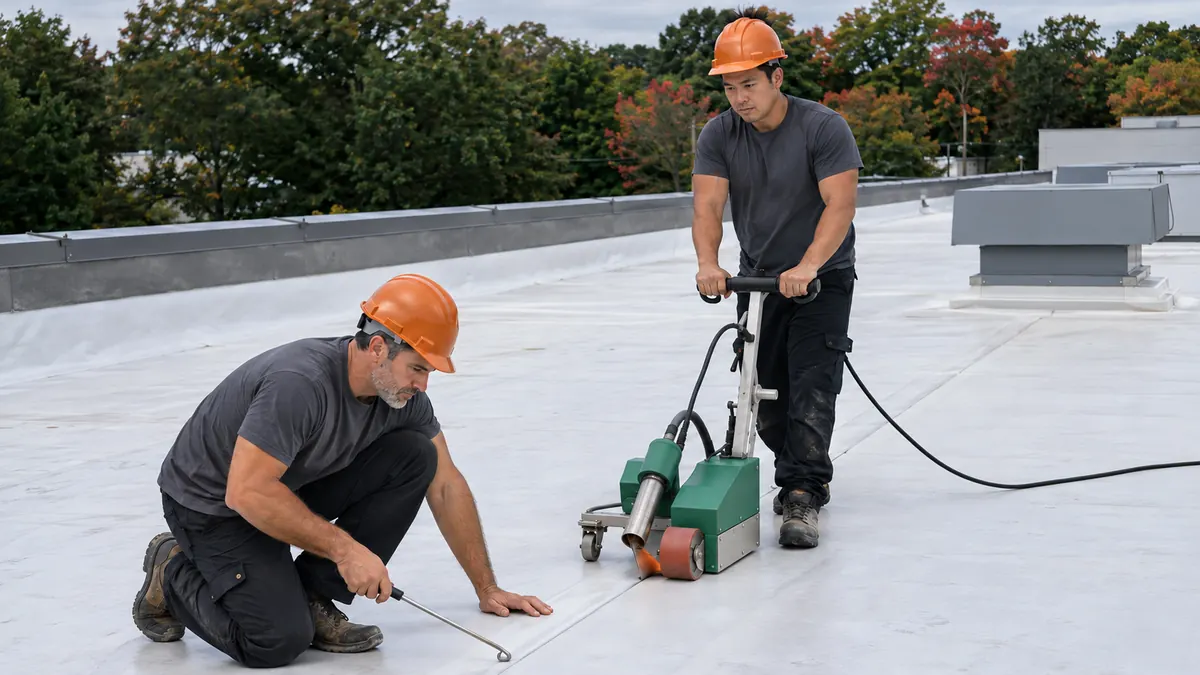
TPO Roofing
Welded white membrane works well over the office and lab wings attached to many plants.
TPO Roofing in Groton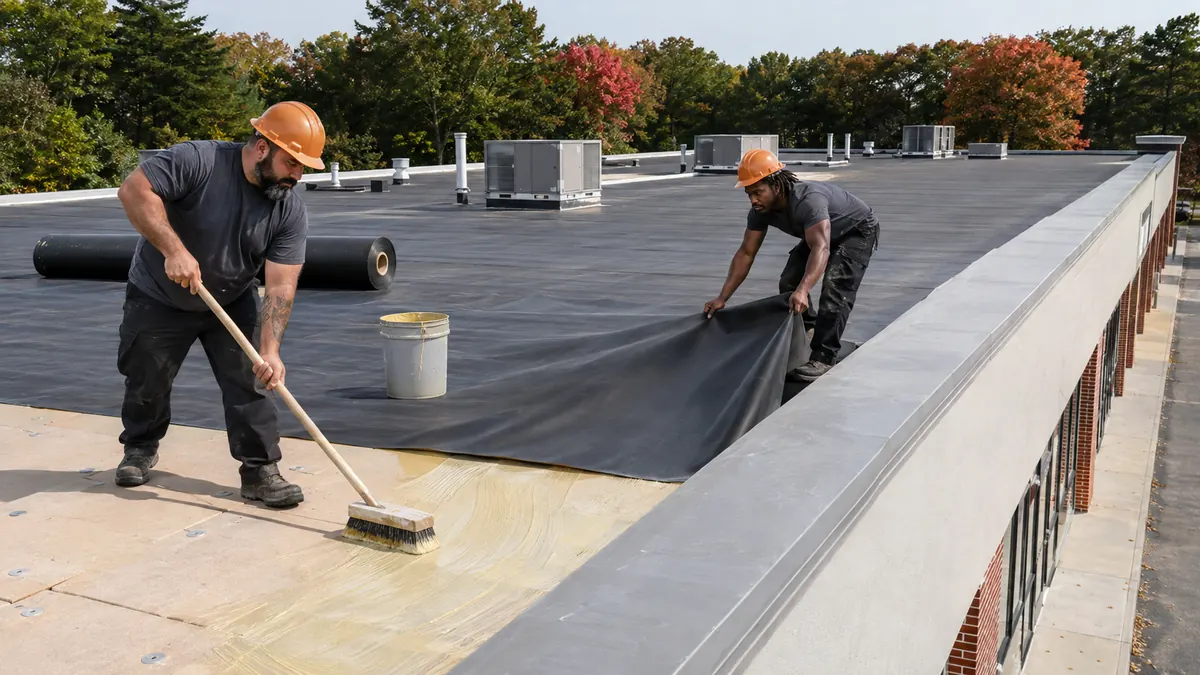
EPDM Roofing
Rubber membrane handles mechanical rooms where pipes and conduits get added and moved often.
EPDM Roofing in Groton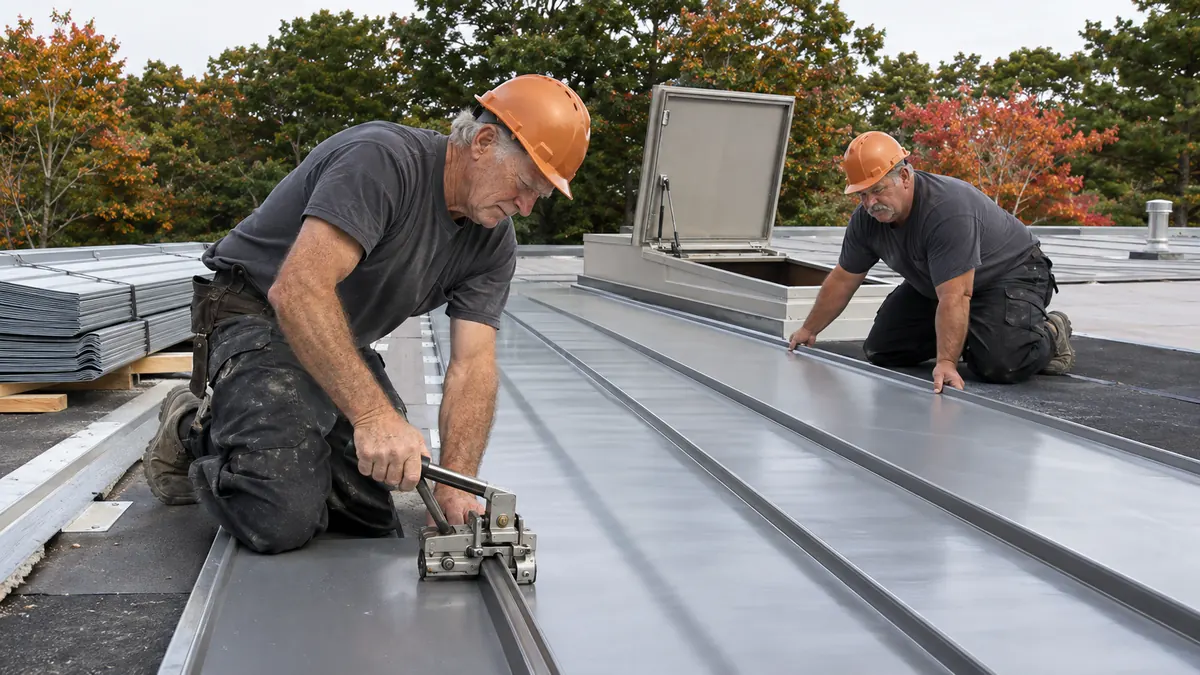
Commercial Metal Roofing
Steel-frame warehouses and sloped shop roofs take standing-seam or ribbed metal panels.
Commercial Metal Roofing in GrotonIndustrial Roofing Questions From Groton Plants
What plant and facility managers ask before a roof project.
Which Industrial Roofing Materials Hold Up on Groton Plants?
TPO, EPDM, modified bitumen, and metal panels all show up on plant roofs. Heat, exhaust, grease, and heavy rooftop equipment decide which membrane and insulation last, so the system gets matched to what the building does and how its structure was built.
What Should Industrial Roofing Contractors Check Before Quoting?
Structure, exhaust zones, equipment curbs, and traffic routes come first. A good quote also accounts for production schedules, interior protection, crane access, and any curbs that must be raised to clear new insulation.
How Is a Plant Roof Built for Nor'easter Winds?
Corners and perimeters carry the most uplift, so they get tighter fastening or full adhesion plus secure edge metal. The building code sets wind design for the location and exposure, and we follow the manufacturer's attachment pattern for that wind zone.
What Roofing Works on Groton Marine Fabrication Buildings?
Large metal or low-slope roofs with skylights, exhaust fans, and crane bays are common, all exposed to salt air. Standing-seam metal or single-ply with corrosion-resistant edge metal fits many of them, with work scheduled around shifts and equipment protected below.
Hire a Groton Industrial Roofing Contractor
Send the address and your production schedule. We will walk the roof, map the equipment, and write a replacement plan by bay.